Book Your Free Fitness Strategy Session 877-426-0860
Why Progress Stops Feeling Like Progress After 40
You're lifting more and showing up, but it still doesn't feel like enough. Here's why progress feels smaller over time and how to see it again.
FITNESS OVER 40MEN OVER 40 FITNESSFAT LOSS OVER 40WOMEN OVER 40 FITNESS
Alfonso Hammond
10/19/20266 min read


Why Progress Stops Feeling Like Progress After 40
You're lifting more than you were. You're moving better. You're showing up on the days you didn't feel like it.
And somehow, it still doesn't feel like enough.
If that's you, nothing is wrong with your progress. There's a reason it can feel smaller the further you go, and once you see it, you can do something about it.
Every goal you reach becomes your new normal
Think back to the goal that once felt out of reach. Maybe it was the first full week of workouts, a lift you couldn't do, or a flight of stairs that left you winded.
Now that you've reached it, it isn't a goal anymore. It's just what you do.
Psychologists call this hedonic adaptation. The satisfaction of a good change tends to fade as the change becomes the new baseline, and researchers have found that this adaptation to positive changes can be relatively rapid (Lyubomirsky, 2011). Part of the reason is that expectations rise right along with your results. What felt like a win last month is now simply the starting point for the next one.
That isn't a flaw in you. It's how attention works. We notice what's new and what's missing, and we stop noticing what we've gotten used to.
Why looking ahead makes the gap look bigger
Once a goal becomes your baseline, your attention moves to the next one. That's useful. It's how people keep growing.
But there's a side effect. The longer you look ahead, the easier it becomes to see how far you still have to go instead of how far you've already come. Your next goal is vivid and specific. Your starting point is fading from memory.
After 40, this can hit harder, because you may be measuring yourself against someone else's version of where you should be by now, or against the person you were ten years ago. Neither one is the right yardstick. Your real starting line is the one you actually started from.
The feeling doesn't mean you've stopped progressing
This is the part worth saying plainly. Feeling like it's not enough is not evidence that it's not working. Strength, consistency and capability can all keep improving while the feeling of progress stays flat.
The feeling and the facts are two different things. The fix isn't to feel more impressed with yourself on command. It's to give yourself something to compare against that doesn't fade.
Three ways to make progress visible again
1. Record your starting line, and keep it. Write down where you started: the weights you used, the reps you could do, how the stairs felt, how long a walk took before you needed a break. Even rough notes work. If you didn't record it at the time, write down what you remember now and label it as an estimate.
This matters beyond motivation. In a meta-analysis of 138 randomized experiments with nearly 20,000 participants, people who monitored their goal progress were more likely to reach their goals, and the effect was larger when progress was physically recorded or reported to someone (Harkin et al., 2016). A record also gives your memory something to check itself against.
2. Schedule a look back, not just a look ahead. Once a month, compare today with your starting line on purpose. Pick two or three things to check: your main lifts, a daily task that used to be hard, and how you feel at the end of a normal week. You're not looking for perfection. You're looking for the distance.
3. Move the finish line, but keep the starting line in view. Keep setting the next goal. Ambition is a good thing and you don't have to give it up. Just make the look back part of the routine. Moving the finish line is how you keep growing. Looking back at the starting line is how you remember you're already growing.
What counts as progress that doesn't show up on the scale
If your only measure is the number on the scale or the weight on the bar, a lot of real progress goes unseen. Here are a few signs that don't show up on either:
Capability: Things that used to take effort now feel ordinary.
Consistency: You show up on weeks that used to derail you.
Recovery: You bounce back from a missed workout or a rough week without starting over.
Confidence: You trust yourself to follow through.
These count. They're often the signs that the habit is real.
When the feeling is still hard to shake
Some people look at the evidence, see the progress, and still feel flat. That's normal, and it usually passes as the new level settles in. Try writing down one specific thing you can do now that you couldn't do when you started, and read it back on the weeks you feel stuck. If the discouragement is heavy or lasts for weeks, it's worth talking with your doctor or someone you trust.
Want a plan that makes progress easy to see?
Our guide Get Strong, Lean & Energized After 45 lays out a 12-week blueprint with structured strength training, protein targets, and a simple way to track your progress so you can see what's changing. Get the guide here: Get Strong, Lean & Energized After 45 | The Fit Velocity
For women: The Woman's No-BS Guide to Fitness After 40 covers the same ground. Get the guide here: The Woman's No-B.S. Guide to Fitness After 40 | The Fit Velocity
You can also get the FREE Guide; The Fitness Over 40 Framework. THIS ISN’T ANOTHER GENERIC AFTER 40 FITNESS GUIDE. This is the NO B.S. Guide to fitness success after 40.
⇒The 8-week jumpstart plan, a four-stage process built to create momentum week by week
⇒The Over-40 plate, a sample day of eating, and a protein target you can actually hit
⇒How to measure real progress beyond the scale
⇒Plus insights on hormones, strength training, supplements, mobility, nutrition and more
Get it here: The Fitness Over 40 Framework
And if you'd rather not figure this out alone, that's what we built The Fit Velocity for. We match you with a vetted coach and a dedicated Fitness Journey Manager, so the progress you've made keeps compounding instead of fading into the background.
Frequently asked questions
Why does my progress feel smaller over time? Every goal you reach becomes your new baseline, and your attention moves to the next one. The longer you look ahead, the easier it is to see the distance still to go and overlook the distance you've covered.
How do I know if I'm really making progress? Compare yourself to a record, not a feeling. Your starting numbers, a monthly check of a few key lifts or tasks, and how your normal week feels now versus then will tell you more than your mood on any given day.
Is it bad to keep setting bigger goals? No. Setting the next goal is how most people keep growing. The point is to pair it with a look back, so ambition doesn't erase what you've already built.
Keep moving the finish line
Just don't forget to look back at the starting line.
What can you do now that you couldn't when you started? Tell us in the comments.
References
Harkin B, Webb TL, Chang BPI, Prestwich A, Conner M, Kellar I, Benn Y, Sheeran P. Does monitoring goal progress promote goal attainment? A meta-analysis of the experimental evidence. Psychological Bulletin. 2016;142(2):198-229. doi:10.1037/bul0000025
Lyubomirsky S. Hedonic adaptation to positive and negative experiences. In: Folkman S, ed. The Oxford Handbook of Stress, Health, and Coping. Oxford University Press; 2011, page range (200–224).
About the Author
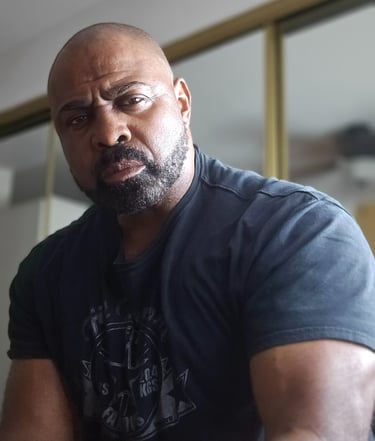
Alfonso Hammond is a 30-year fitness industry veteran, founder of The Fit Velocity, and a firm believer that lasting fitness is built on purpose, accountability, and relationships, not shortcuts. He created The Fit Velocity because he saw too many men and women over 40 following programs that were never designed for the lives they actually live. They didn't need another workout. They needed a Journey worth staying on. His philosophy is simple: People don't start from nothing. They start from everything they already are. Whether working with competitive athletes or someone taking their first walk in years, Alfonso's approach remains the same: strengthen the person, strengthen the Journey, and the results will follow
Every article, guide, and resource published through The Fit Velocity is built upon the same principles found throughout the TFV Testament, practical, honest, and grounded in the belief that meaningful progress comes from reclaiming who you are, strengthening the person you are building, and continuing to thrive throughout life.

WORKING HOURS
Monday - Friday 8:00 AM - 5:00 PM
Saturday 8:00 AM - 4:00 PM
THE FIT VELOCITY
Huntington Beach, CA 92649
877-426-0860
RECLAIM. BUILD. THRIVE.



2026 Packed Ice, Inc. DBA The Fit Velocity - Privacy Policy - Terms of Service