Book Your Free Fitness Strategy Session 877-426-0860
Fat Loss After 40: Why You May Feel Weaker, Not Stronger
Hit your goal weight but feel weaker? Fat loss after 40 can take muscle with it. Here's why it happens and how to protect your strength.
FITNESS OVER 40FAT LOSS OVER 40WOMEN OVER 40 FITNESSMEN OVER 40 FITNESS
Alfonso Hammond
10/16/20265 min read


Fat loss and weight loss aren't the same thing
The scale tells you one thing: how much you weigh. It can't tell you what you lost.
When weight comes down, some of that loss can come from lean mass, not just fat. That's more likely when protecting muscle wasn't part of the plan. In a systematic review of middle-aged and older adults, most groups that lost weight through diet alone lost a meaningful share of it as fat-free mass (which includes muscle). Far fewer did when exercise was part of the plan (Weinheimer et al., 2010).
So you can hit your goal weight and still feel like something got left behind. The scale only shows that you weigh less.
Why it matters more after 40
After 30, the body gradually loses muscle on its own. Commonly cited estimates put that at roughly 3 to 8 percent per decade, and it varies a lot from person to person (Cruz-Jentoft et al., 2010).
Fat loss after 40 stacks a deliberate loss on top of a slow, natural one. That's why protecting muscle isn't a nice extra at this stage. It's part of the result.
Other reasons you may feel weaker
Not every case of "I feel weaker" is muscle loss. A few other things can contribute:
Eating less fuel than you need to train well
Lighter or shorter workouts because training became about burning calories instead of building strength
Less recovery while the deficit continues
The scale can't sort these out. Your training log can. If your lifts have been dropping along with your weight, that's useful information, not a verdict. And if the weakness is sudden, severe or unexplained, bring it up with your doctor.
Losing the weight wasn't wasted work
This is where a lot of people get discouraged, so let's say it plainly. You reached a real goal. That took consistency, and it counts.
What changes now is the goal itself. At The Fit Velocity, we don't think the finish line is a lighter body. We think it's a capable one. Reaching one goal shows you what the next part of the journey is: protecting what you built, and keeping your strength.
That's what makes this a THRIVE moment. Success doesn't end the journey. It asks a better question.
Three ways to protect the body you're revealing
1. Keep resistance training in the plan.
Resistance training is one of the most reliable ways to help preserve muscle during weight loss, and it also improves strength (Cava et al., 2017). Cardio helps your fitness, but it isn't a substitute.
A practical starting point: two to three full-body sessions a week built around the basic patterns (a squat or leg press, a hinge like a Romanian deadlift, a push, a pull). Choose a load that challenges you with clean form, and aim to add a little over time. If your weights keep dropping every time your calories do, that's your signal to adjust.
2. Prioritize enough protein.
Higher protein intake during weight loss helps preserve lean mass (Cava et al., 2017). The goal is adequate, not extreme. A common range is roughly 0.8 to 1 gram per pound of your goal body weight, spread across your meals. If you have kidney disease or another medical condition that affects protein, check with your doctor first.
Keep in mind what protein does and doesn't do. It supports the muscle you have. Training is what builds and protects your strength.
3. Track more than bodyweight.
This is the one most people skip. Along with the scale, pay attention to:
Strength: Log your main lifts. Are the weights and reps holding steady or climbing?
Performance: How do stairs, carrying groceries and getting up off the floor feel?
How you look and fit: Clothes, photos and measurements tell a different story than the scale.
If your weight is dropping while your strength holds or improves, that's a good sign you're keeping what matters. If your weight and strength are both dropping, adjust sooner rather than later. That might mean eating a bit more, training smarter, or both.
If it already happened to you
This isn't permanent. Muscle responds to progressive training and adequate protein at any age, and most people can rebuild strength they lost. Give yourself a few weeks to find the right loads again, resist the urge to cut calories further to "make up" for it, and let your numbers in the gym guide you.
Want the full plan?
Our guide Get Strong, Lean & Energized After 45 lays out a 12-week blueprint built around exactly these ideas: structured strength training you can fit into a busy week, protein targets, smart cardio, and how to track your progress so you can see what's changing.
For women: The Woman's No-BS Guide to Fitness After 40 covers the same ground, including protein and strength training.
You can also get the FREE guide Fitness Over 40 Framework: The No B.S. Guide!
THIS ISN’T ANOTHER GENERIC AFTER 40 FITNESS GUIDE.
⇒The 8-week jumpstart plan, a four-stage process built to create momentum week by week
⇒The Over-40 plate, a sample day of eating, and a protein target you can actually hit
⇒How to measure real progress beyond the scale
⇒Plus insights on hormones, strength training, supplements, mobility, nutrition and more
Get it here: www.thefitveolcity40.com
And if you'd rather not figure this out alone, that's what we built The Fit Velocity for. We match you with a vetted coach and a dedicated Fitness Journey Manager so the result you worked for turns into one you keep.
Frequently asked questions
Is it normal to feel weak after losing weight?
It can be. Losing lean mass, eating less fuel than you need, and cutting back on recovery can all contribute. If the weakness is sudden, severe or doesn't improve, talk to your doctor.
Can you lose fat without losing muscle?
Most people lose at least a little. But resistance training, enough protein and a steady (not extreme) pace can help limit it.
How do I know if I lost muscle?
The scale can't tell you. Watch your strength in the gym, how your clothes fit, and how everyday movement feels. A body composition scan can add detail, but it's best used for trends, since the readings vary.
Don't just arrive at a lighter body
Build one that's still capable.
About the Author
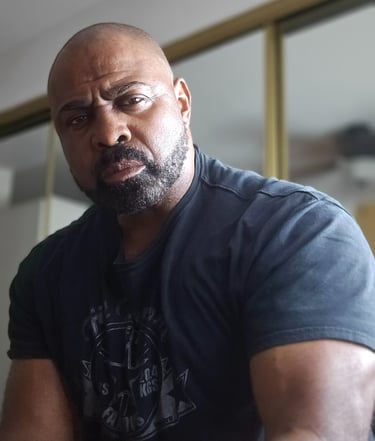
Alfonso Hammond is a 30-year fitness industry veteran, founder of The Fit Velocity, and a firm believer that lasting fitness is built on purpose, accountability, and relationships, not shortcuts. He created The Fit Velocity because he saw too many men and women over 40 following programs that were never designed for the lives they actually live. They didn't need another workout. They needed a Journey worth staying on. His philosophy is simple: People don't start from nothing. They start from everything they already are. Whether working with competitive athletes or someone taking their first walk in years, Alfonso's approach remains the same: strengthen the person, strengthen the Journey, and the results will follow
Every article, guide, and resource published through The Fit Velocity is built upon the same principles found throughout the TFV Testament, practical, honest, and grounded in the belief that meaningful progress comes from reclaiming who you are, strengthening the person you are building, and continuing to thrive throughout life.
References
Weinheimer EM, Sands LP, Campbell WW. A systematic review of the separate and combined effects of energy restriction and exercise on fat-free mass in middle-aged and older adults: implications for sarcopenic obesity. Nutrition Reviews. 2010;68(7):375-388.
Cava E, Yeat NC, Mittendorfer B. Preserving healthy muscle during weight loss. Advances in Nutrition. 2017;8(3):511-519.
Cruz-Jentoft AJ, et al. Sarcopenia: European consensus on definition and diagnosis. Age and Ageing. 2010;39(4):412-423.
WORKING HOURS
Monday - Friday 8:00 AM - 5:00 PM
Saturday 8:00 AM - 4:00 PM
THE FIT VELOCITY
Huntington Beach, CA 92649
877-426-0860
RECLAIM. BUILD. THRIVE.
2026 Packed Ice, Inc. DBA The Fit Velocity - Privacy Policy - Terms of Service